Exercise and tips to combat office chair butt - piriformis syndrome
If you sit at a desk all day or even on the couch you may experience vague discomfort and pain where you sit. We call this lower cross syndrome, gluteal amnesia dead butt syndrome or more recently office chair butt.
In this syndrome, muscle tightness and weakness combine to create an imbalance. Constant sitting weakens the gluteus medius, the main stabilizer muscles in the buttock. The job of the gluteus medius is to stabilize your hips and pelvis. When it’s weak and can’t function properly, you may experience varying levels of hip and lower back pain when you sit and sometimes when you move. It also causes the hip flexors to tighten and since these muscles attach to the spine - can lead to back pain.
With minutes of sitting down - the nerves that activate glutes can shut down which can cause your glutes to atrophy (lose muscle) over time. This can cause your glutes to become weak, sag and flatten.
I shared tips to combat office butt and exercises that will help your butt and back feel better on The Social. These exercises will also help lift and round your glutes so it doesn’t look like you’ve been sitting all day.
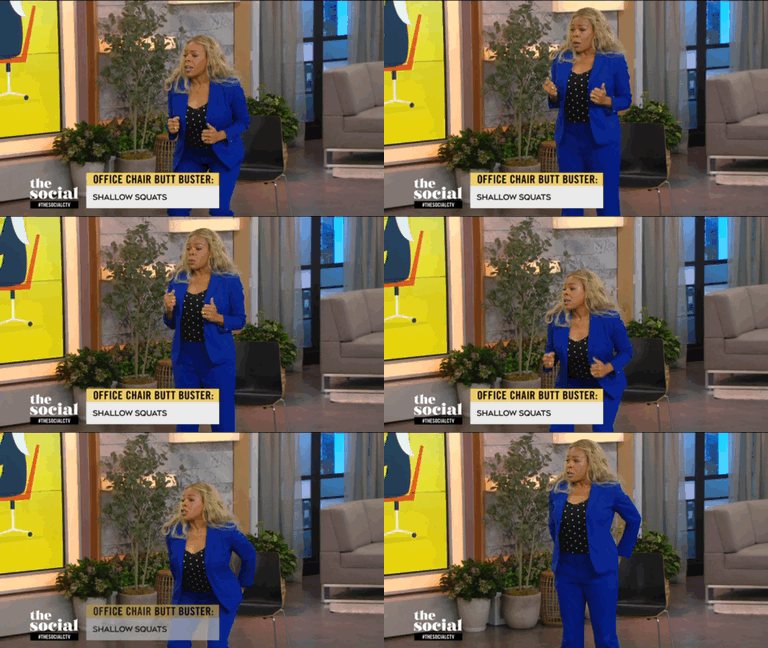
1. Shallow Squats
How to Do It:
Stand with your feet shoulder-width apart, toes pointing slightly outward. Engage your core and keep your back straight.
Slowly lower your hips by bending your knees, as if you are sitting in a chair.
Only go down about quarter to halfway (about 30-45 degrees) to avoid excessive hip strain.
Ensure your knees do not go past your toes and keep your weight in your heels.
Hold for 1-2 seconds at the bottom, then push through your heels to return to standing.
Repeat for 10-15 reps, 2-3 sets.
Benefits:
Strengthens glutes, quads, and hamstrings, which relieves pressure on the piriformis.
Encourages proper hip alignment and posture.
Improves hip stability without overstretching the piriformis muscle.
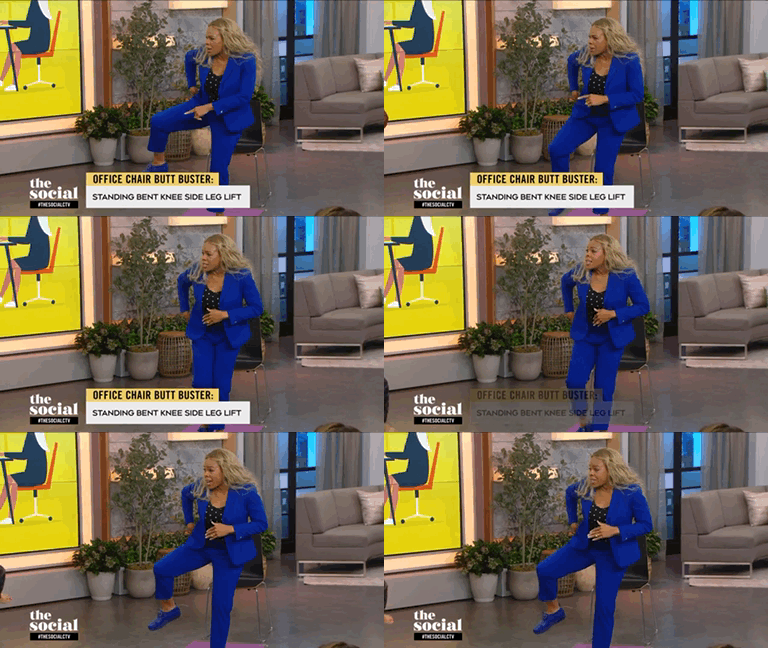
2. Standing Bent Knee Side Leg Lift
How to Do It:
Stand tall with feet shoulder width apart
Shift your weight onto one leg, slightly bend both knees.
Lift the opposite leg out to the side, keeping the knee bent at about a 90° angle.
Keep your hips level - don’t tilt or rotate your torso.
Pause at the top for a second, then lower slowly.
Repeat for 10–12 reps per side.
Benefits:
Targets the gluteus medius, an important stabilizer that supports the piriformis.
Helps reduce overuse of the piriformis by strengthening surrounding muscles.
Encourages better hip stabilization and alignment, reducing sciatic nerve irritation.
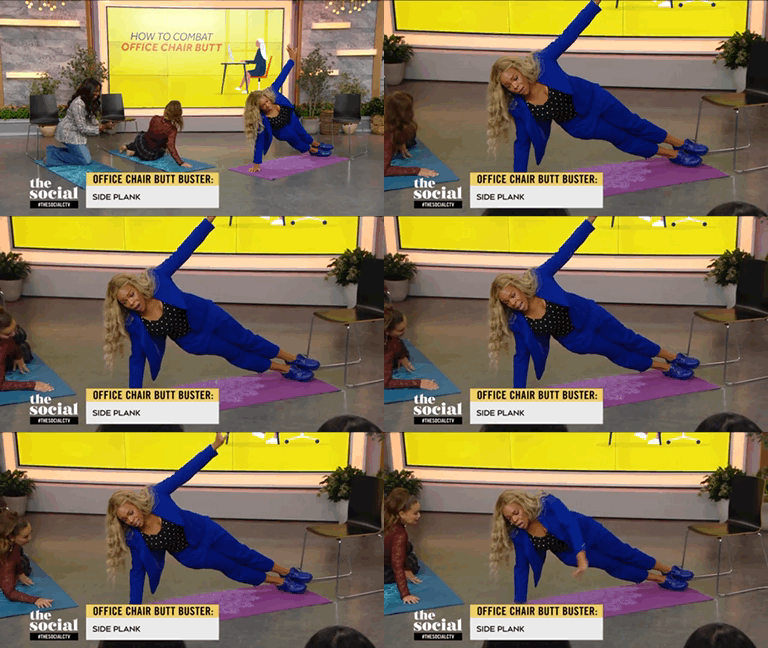
3. Side Plank
How to Do It:
Lie on your side with your elbow directly under your shoulder and your legs extended.
Stack your feet on top of each other (or place the top foot in front for more stability).
Engage your core and lift your hips off the floor, forming a straight line from head to feet.
Hold for 15-30 seconds, keeping your body aligned.
Lower back down slowly and switch sides.
Repeat 2-3 times per side.
Modification: Drop the bottom knee to the floor for a beginner-friendly version.
Benefits:
Strengthens core, hips, and glute muscles, reducing piriformis strain.
Improves lateral hip and spine stability, which helps prevent sciatic compression.
Reduces compensation from piriformis by activating stabilizing muscle groups.
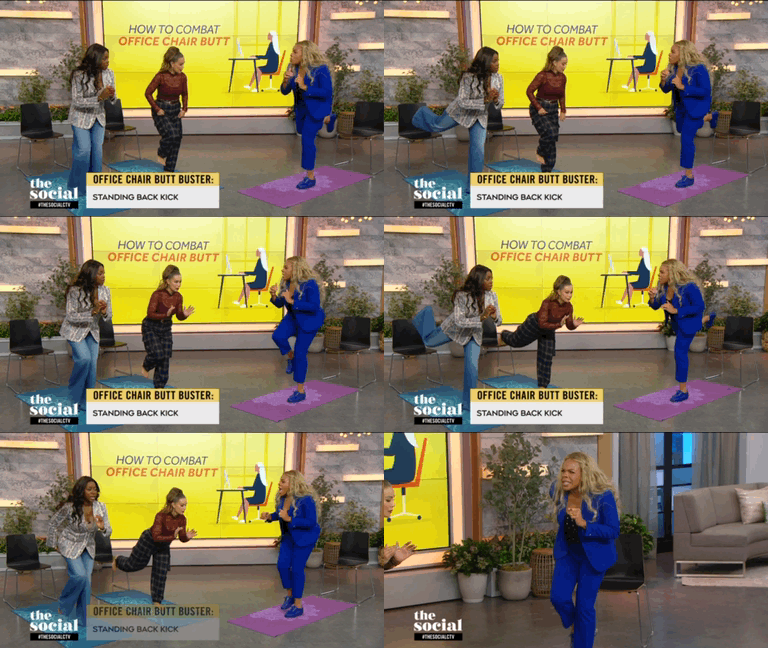
4. Standing Back Kick
How to Do It:
Stand tall with feet hip-width apart.
Shift your weight onto one leg and extend the opposite leg straight back.
Keep the extended leg straight and squeeze your glutes as you lift it.
Avoid arching your lower back - keep your core tight.
Slowly return to the starting position.
Perform 10-15 reps per leg, 2-3 sets.
Benefits:
Strengthens gluteus maximus, which often compensates for a weak piriformis. Reduces over-reliance on the piriformis muscle for hip extension.
Enhances hip joint mobility and stability, helping alleviate pressure on the sciatic nerve.
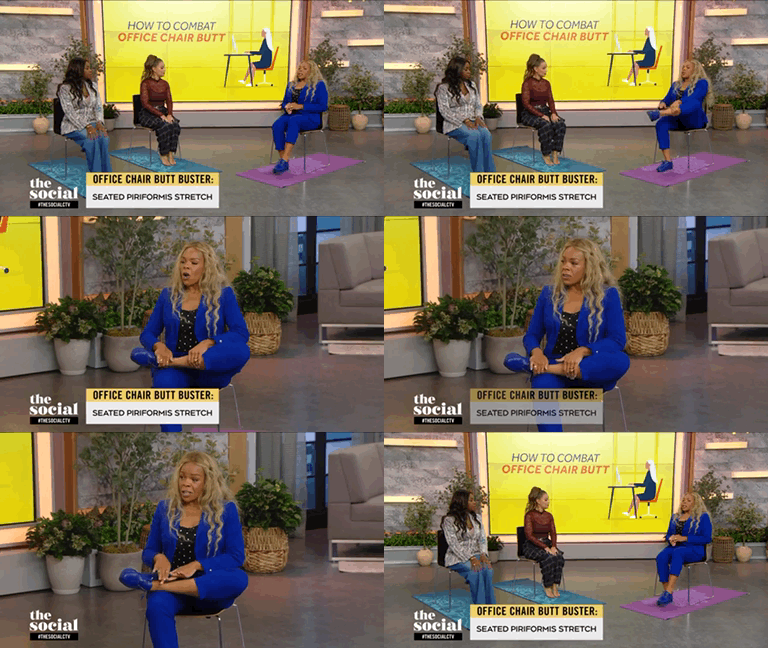
5. Seated Piriformis Stretch
How to Do It:
Sit on a sturdy chair with feet flat on the ground.
Cross your right ankle over your left knee (figure-4 position).
Sit up tall, then gently lean forward from your hips, keeping your back straight. You should feel a stretch deep in the right buttock.
Hold for 20-30 seconds, breathing deeply.
Return to upright and switch legs.
Repeat 2-3 times per side.
Benefits:
Directly stretches the piriformis muscle, reducing tightness and pressure on the sciatic nerve. Improves hip flexibility and reduces nerve compression symptoms.
Easy to perform throughout the day to manage flare-ups or stiffness.
If you think you have office chair butt or just have any pain - I can help! Book an appointment with me at thefixtto.com